10 Best Sudoku Games of All Time : From 1989 to Today
In 1979 a puzzle magazine in New York printed a grid of numbers with some squares left empty and called it Number Place. Its probable designer, a retired architect from Indiana named Howard Garns, did not live to see it become a worldwide hit. In 1984 the Japanese puzzle publisher Nikoli started printing it under a long name meaning "the numbers must be single", soon shortened to sudoku. Twenty years later Wayne Gould, a retired judge in Hong Kong who had spent six years writing a program to make the puzzles, persuaded The Times of London to print one, and within a year sudoku was everywhere.
Sudoku is a pencil-and-paper puzzle at heart, but it has a second home on screens: on a home computer in 1989, on handhelds during the craze, and now on phones, in browsers and on YouTube, where experts solve puzzles while you watch in videos seen hundreds of millions of times. These are the ten sudoku games we think matter most: the ones that brought the puzzle to new players, changed how it is played or are simply the best way to play it now. They are in release order, and each one ends with where you can play it in 2026. At the end there is a bonus: a game of our own.
1. DigitHunt
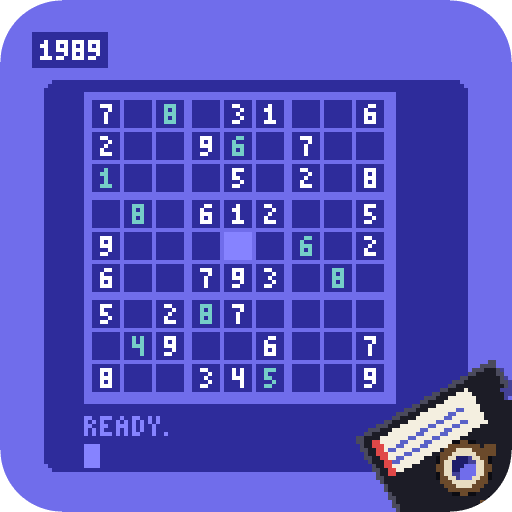
Fifteen years before the craze, Loadstar, a monthly magazine that came on a floppy disk for the Commodore 64, shipped a little number game called DigitHunt. You fill the gaps in a 9×9 grid so that every row, column and 3×3 box holds the digits 1 to 9: sudoku in all but name. It is probably the first sudoku ever made for a home computer.
It has nine skill levels, with more empty squares the higher you go, and it keeps a high score for each level. It came out in 1989, the same year Howard Garns died, long before anyone outside Japan called the puzzle sudoku.
- Made by: Dave Johannsen, published by Softdisk in its Loadstar disk magazine
- First on: Commodore 64, 1989 (Loadstar issue 60)
- Play it today: LOADSTAR COMPLEAT on itch.io, a paid, emulated collection of the magazine's Commodore 64 disks made with the blessing of Loadstar's owners (Windows and Linux)
2. Brain Age
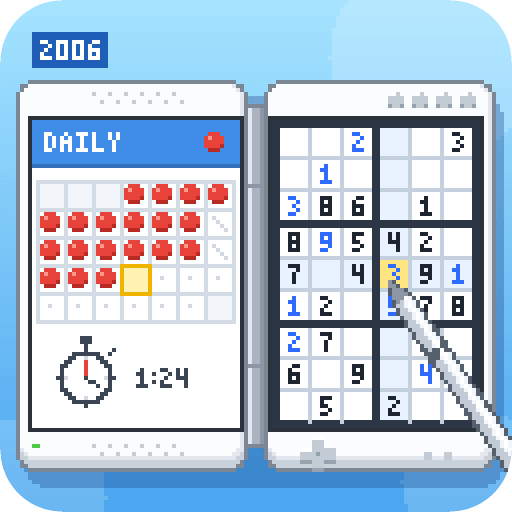
Nintendo's Brain Age (Dr Kawashima's Brain Training in Europe) was a phenomenon: a game about keeping your mind sharp with a few minutes of exercises a day, played with the DS held sideways like a book. The Japanese original from 2005 had no sudoku at all. Nintendo added it for the Western release in 2006, right at the height of the craze, with more than 100 puzzles that you solve by writing digits on the touch screen with the stylus.
For many players it was their first sudoku on a screen. Brain Age went on to sell more than 19 million copies, and critics liked its sudoku more than some whole sudoku games: IGN and Nintendo World Report both preferred it to Sudoku Gridmaster, the sudoku cartridge Nintendo published in the West the same year.
- Made by: Nintendo
- First on: Nintendo DS, 2006 (North America; the 2005 Japanese original has no sudoku)
- Play it today: on the original DS cartridge (a Wii U download was sold until the Wii U eShop closed in March 2023). Its sudoku is back, with 100 puzzles, in Dr Kawashima's Brain Training for Nintendo Switch (Europe, Australia and Asia; it is not sold in North America)
3. Microsoft Sudoku
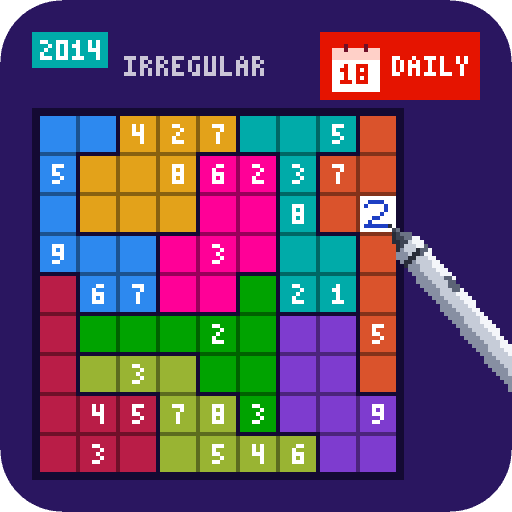
Solitaire has come with Windows since 1990, and Minesweeper did until Windows 8. In 2014 Microsoft added sudoku to its family of free casual games: Microsoft Sudoku launched as a free download for Windows 8.1 with daily challenges, Xbox achievements and leaderboards, and you could write your numbers with a pen on a touch screen.
It has kept growing since: six difficulty levels, an Irregular mode where the boxes are jigsaw shapes instead of squares, and three new challenges every day. It came to iPhone and Android in 2020, and more than 40,000 players have rated it 4.8 out of 5 in the Microsoft Store.
- Made by: Microsoft Casual Games
- First on: Windows 8.1, 2014
- Play it today: free on Windows 10 and 11 (Microsoft Store), iPhone, iPad and Android, with ads (on phones and tablets a Premium subscription removes them)
4. Sudoku.com
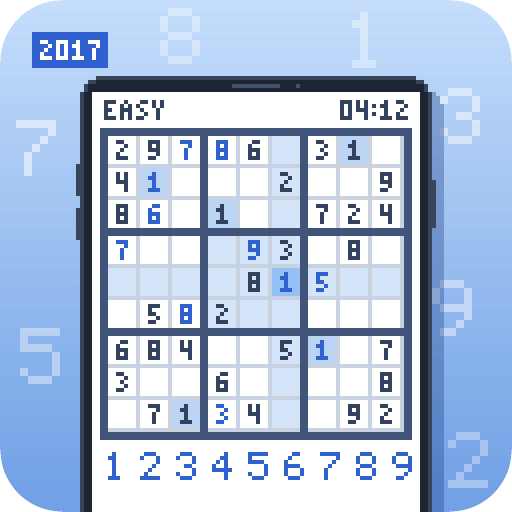
By 2001 Wayne Gould's company, Pappocom, was already selling his sudoku program for Windows at sudoku.com. Today the address belongs to Easybrain, a studio based in Cyprus, and its Sudoku.com app is one of the most-played sudoku games in the world: it has more than 100 million downloads on Android alone, and nearly 2 million ratings on the iPhone App Store.
The app sticks to clean classic sudoku in six difficulty levels, with daily challenges, seasonal events and tournaments, free with ads; the website adds Killer sudoku, where groups of cells must add up to a given total. It is big business too: Sudoku.com was one of the games named when Embracer Group bought Easybrain in 2021, and again when Miniclip agreed to buy the studio for $1.2 billion in 2024.
- Made by: Easybrain
- First on: iPhone, 2017
- Play it today: free on iPhone, iPad and Android, and in any browser at sudoku.com
5. Cracking the Cryptic's sudoku apps
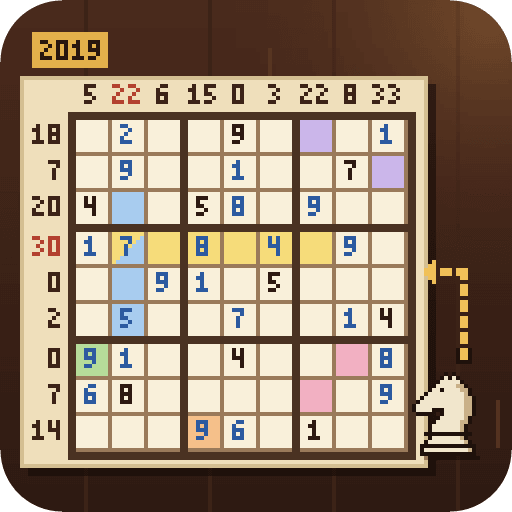
Cracking the Cryptic is a YouTube channel where two British puzzle experts, Simon Anthony and Mark Goodliffe, solve sudokus while thinking out loud. In 2019 they started releasing apps made by Studio Goya, beginning with Sandwich Sudoku, where each clue outside the grid gives the sum of the digits between the 1 and the 9 in that row or column. Classic, Chess, Thermo, Miracle, Killer and Arrow Sudoku followed. Nearly every puzzle is made by hand, and Simon and Mark wrote the hints themselves.
Then, in May 2020, Simon solved "The Miracle", a puzzle by Mitchell Lee that starts with just two digits on the grid. The video went viral, with coverage in The Guardian and Vice, and it has been watched millions of times. Miracle Sudoku became an app that August. Sudoku had become a spectator sport, and the channel has passed 300 million views.
- Made by: Studio Goya, with puzzles by Simon Anthony, Mark Goodliffe and guest setters
- First on: iPhone, iPad, Windows and Mac (Steam), 2019 (Sandwich Sudoku)
- Play it today: one app per variant on Steam (Windows and Mac), iPhone, iPad and Android, or the free Cracking the Cryptic app with paid puzzle packs
6. Sven's SudokuPad
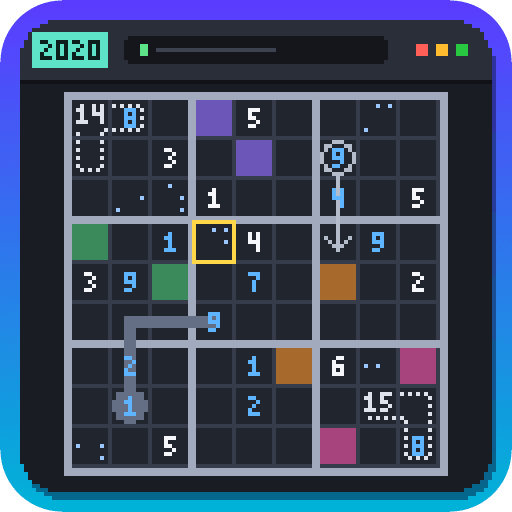
If you watch Cracking the Cryptic today, the puzzle on screen is running in SudokuPad. Sven Neumann, a programmer who found the channel during the pandemic, built a first prototype over a weekend to fix problems with the tool the hosts were using. It has since become one of the most popular places to play variant sudoku: setters share their puzzles as SudokuPad links, and anyone can solve them in a browser with the same pencil marks and colors the hosts use.
It is free on the web, supported by its fans on Patreon, with paid apps for phones and PCs. In mid-2024 Neumann said about 40,000 people used it every day.
- Made by: Sven Neumann, with Cracking the Cryptic
- First on: web browsers, 2020, as the Cracking the Cryptic web app (the SudokuPad apps followed in 2021)
- Play it today: free at sudokupad.app; apps for iPhone, iPad, Android and Apple-silicon Macs, and for Windows on Steam and itch.io
7. Good Sudoku
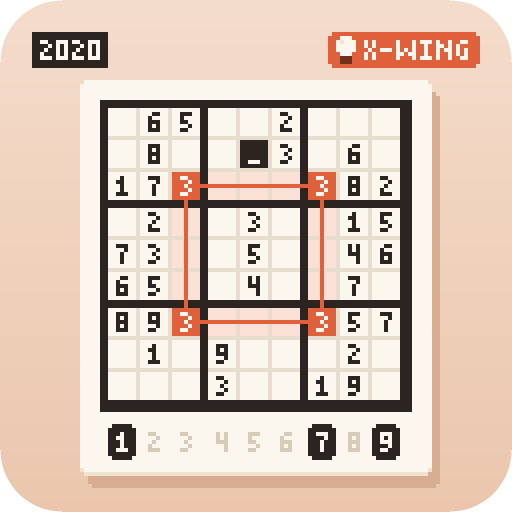
Zach Gage, the designer of SpellTower and Really Bad Chess, set out to make a sudoku that removes the busywork without changing the rules. Tap a cell and Good Sudoku shows only the digits that can still go there. Get stuck and it reads your answers and notes, works out which techniques you already know and walks you to the next logical step, from the basics up to Swordfish, Jellyfish and XYZ-Wings.
It has more than 70,000 puzzles sorted by the techniques they need, plus three daily puzzles with global leaderboards. TouchArcade made it Game of the Week at launch, and when Apple Arcade opened its Timeless Classics section in April 2021, Good Sudoku was the first game Apple named.
- Made by: Zach Gage and Jack Schlesinger
- First on: iPhone and iPad, 2020
- Play it today: free on iPhone, iPad and Mac with a one-time unlock, or as Good Sudoku+ with an Apple Arcade subscription (no Android or PC version)
8. Puzzle by Nikoli S Sudoku
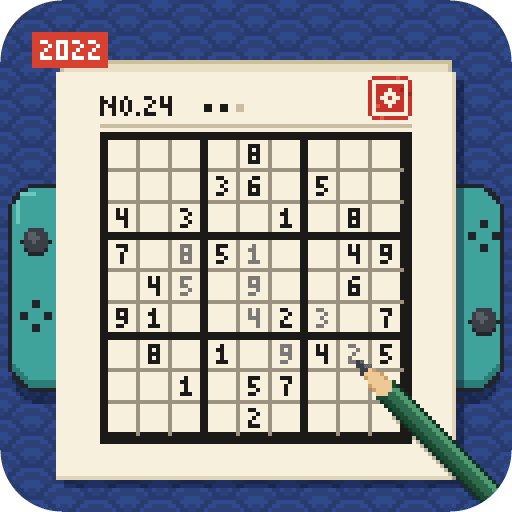
Nikoli is the Japanese publisher that named sudoku, and it still holds the trademark in Japan; that is why Sony's PSP sudoku came out there as Kazuo. Many sudoku apps make their puzzles by computer, but Nikoli makes its puzzles by hand.
In 2022 HAMSTER, best known for its Arcade Archives re-releases, brought them to today's consoles: Nikoli made every puzzle and helped design the interface. It is the most direct way to play the original sudoku publisher's puzzles on a TV or a handheld, and it costs $4.99. Nikoli's puzzles had been in games before: Nintendo said the puzzles in Sudoku Gridmaster (2006) were "hand-picked by the original creators of sudoku".
- Made by: HAMSTER, with Nikoli
- First on: Nintendo Switch, Xbox One and Windows, 2022
- Play it today: Nintendo Switch and Switch 2, or as Puzzle by Nikoli W Sudoku on Xbox and Windows; Nikoli's official iPhone app, Sudoku -- official Nikoli (made by Crisp under licence), is free with a $4.99 puzzle pack
9. LinkedIn Mini Sudoku
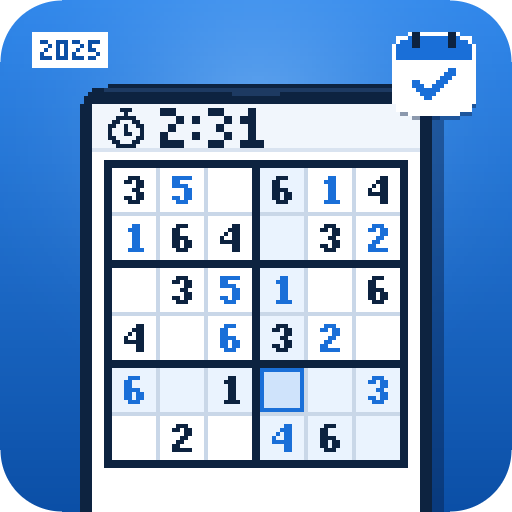
Sudoku is now part of the daily-puzzle habit that Wordle made popular. In August 2025 LinkedIn added Mini Sudoku to its games: a 6×6 grid with the digits 1 to 6 and a new puzzle every day, made with Nikoli and three-time World Sudoku Champion Thomas Snyder, who also records a video explaining each solution.
It takes a couple of minutes, it gets harder as the week goes on, and you do not need a LinkedIn account to play.
- Made by: LinkedIn, with Nikoli and Thomas Snyder
- First on: the LinkedIn app, 2025
- Play it today: free at linkedin.com/games and in the LinkedIn app, a new puzzle every day
10. Sudoku Mansion
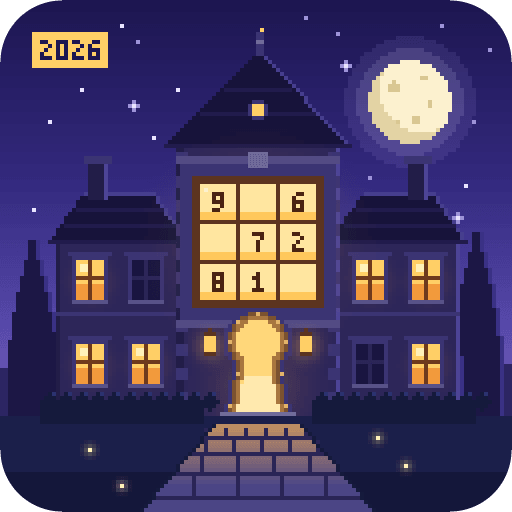
The newest game on our list shows how far variant sudoku has come. In Sudoku Mansion you explore a house where every room is a hand-made puzzle by Nurator, a setter whose puzzles have also appeared on Cracking the Cryptic, and each room introduces one new idea. Pick up "classes" such as German Whisperer and the rules change in rooms you have already seen. There are secret rooms, hidden vaults and bosses too.
It came out on Steam in August 2026, and its players rate it Very Positive. There is a free demo.
- Made by: Vault Door Studios, with puzzles by Nurator
- First on: Windows (Steam), 2026
- Play it today: Steam (Windows), with a free demo
Honorable mentions
- Go! Sudoku (2005): Sony's PSP sudoku (Ubisoft published it in North America), made by the British studio Sumo Digital, with 1,000 puzzles and wireless battles for up to four players. A download version followed on PlayStation 3.
- GNOME Sudoku (2005): Thomas Hinkle wrote it after his wife got hooked on the puzzle, and it became one of the GNOME desktop's games on Linux. GNOME rewrote it in 2014 and still updates it, and you can get it free from Flathub.
- The New York Times sudoku: an easy, a medium and a hard puzzle every day on nytimes.com and in the NYT Games app, next to Wordle and the Crossword. One a day is free; the others need a Games subscription.
- Blockudoku (2019): Easybrain's block puzzle on a sudoku grid. There are no digits, but a full row, column or 3×3 box clears, like a line in Tetris.
Bonus: Shaolin Sudoku (our game)
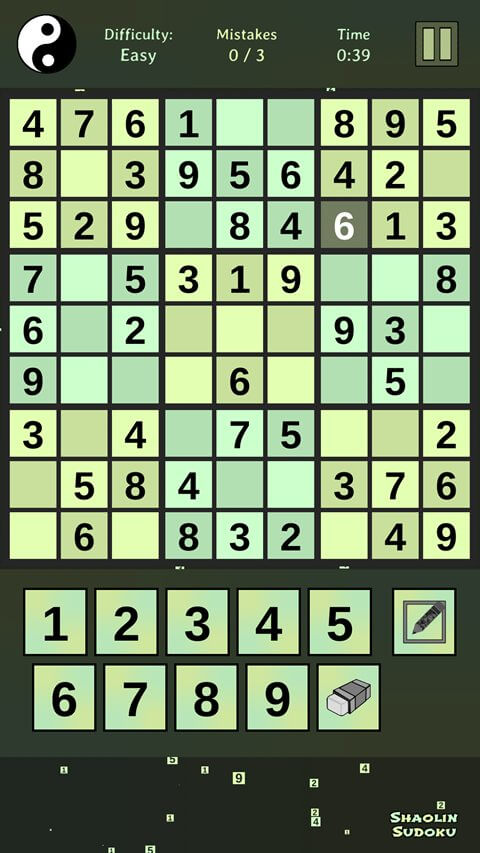
We could not write about sudoku without mentioning our own: Shaolin Sudoku brings the calm of yin and yang to the classic puzzle. It has no list of ready-made puzzles; it creates a brand-new one with a unique solution every time you play. You can also type in a puzzle of your own, share puzzles as links and pick from 13 themes. It is available on Windows, Linux, Android and the web.
Everybody has a favorite way to play sudoku, and these are ours. Did we miss yours? Tell us
Sources :
- Sudoku's history: Sudoku on Wikipedia (opens in a new tab), Howard Garns on Wikipedia (opens in a new tab), Wayne Gould on Wikipedia (opens in a new tab)
- DigitHunt: Loadstar on Wikipedia (opens in a new tab), Loadstar on C64-Wiki (opens in a new tab), DigitHunt on LaunchBox (opens in a new tab), LOADSTAR COMPLEAT (opens in a new tab)
- Brain Age: Brain Age on Wikipedia (opens in a new tab), how sudoku got into Brain Age (opens in a new tab), Sudoku Gridmaster on Nintendo World Report (opens in a new tab), Brain Training for Nintendo Switch (opens in a new tab)
- Microsoft Sudoku: launch on Windows Central (opens in a new tab), Microsoft Store (opens in a new tab), App Store (opens in a new tab)
- Sudoku.com: Pappocom's sudoku.com in 2001 (opens in a new tab), Google Play (opens in a new tab), App Store (opens in a new tab), Embracer and Easybrain (opens in a new tab), Miniclip and Easybrain on MobileGamer.biz (opens in a new tab)
- Cracking the Cryptic: Cracking the Cryptic on Wikipedia (opens in a new tab), Sandwich Sudoku on Steam (opens in a new tab), the Miracle on Vice (opens in a new tab)
- SudokuPad: interview with Sven Neumann (opens in a new tab), Sven Neumann on ShopTalk Show (opens in a new tab), the web app in 2020 (opens in a new tab), SudokuPad (opens in a new tab)
- Good Sudoku: Good Sudoku press kit (opens in a new tab), TouchArcade's Game of the Week (opens in a new tab), Apple Newsroom (opens in a new tab)
- Puzzle by Nikoli S Sudoku: sudoku at Nikoli (opens in a new tab), why Nikoli makes puzzles by hand (opens in a new tab), the launch on 4Gamer (Japanese) (opens in a new tab), Nintendo eShop (opens in a new tab), Nikoli's iPhone app (opens in a new tab), Sudoku Gridmaster press release (opens in a new tab)
- LinkedIn Mini Sudoku: LinkedIn's announcement (opens in a new tab), Mini Sudoku on Design Compass (opens in a new tab), playing without an account (opens in a new tab)
- Sudoku Mansion: Sudoku Mansion on Steam (opens in a new tab), Nurator on Cracking the Cryptic (opens in a new tab)
- Honorable mentions: Go! Sudoku on Wikipedia (opens in a new tab), GNOME Sudoku's first site (opens in a new tab), GNOME Sudoku on Flathub (opens in a new tab), NYT Games on Wikipedia (opens in a new tab), Blockudoku on the App Store (opens in a new tab)
Sudoku is a registered trademark of Nikoli Co., Ltd. in Japan. Game names are trademarks of their owners. The pixel-art illustrations are our own, and the Shaolin Sudoku screenshot is from our game.
If you like this article,