The Luxury of Grace : How Maleficent Exposes the Privilege of Paradise
Fairy tales like to tell us that goodness is simple. The heroine is kind because her heart is pure; the villain is cruel because he gave in to greed. Lately Disney has been rereading its own villains. In Sleeping Beauty (1959), Maleficent curses a baby princess because nobody invited her to the christening. In Maleficent (2014), she curses the daughter of the man who drugged her and cut off her wings. The villain became the wronged party, Angelina Jolie made her unforgettable, the film earned more than $750 million worldwide, and the studio went on to give Cruella de Vil an origin story of her own.
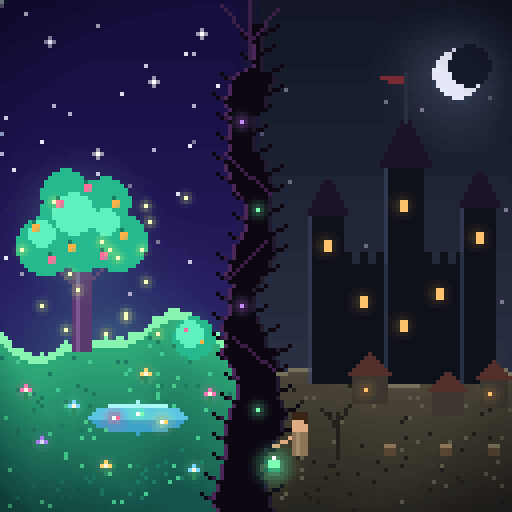
This article turns the story over one more time and looks at it from the side of the one character the film never redeems: King Stefan. Strip away the glittering effects and the war between the Moors and the human kingdom stops being a war between good and evil. It becomes a border war between a world that has everything and a world that never has enough. Our claim is this: in Maleficent, human "greed" is what survival looks like when there is not enough to go around, and the famous purity of the Moors is a luxury: something only plenty can buy, and, like most luxuries, kept by deciding who gets in.
We are not the first to read Maleficent as a story about wealth, but we read it the other way round. Writing in Forbes when the film came out, Jordan Shapiro saw in the Moors something like a "socialist democracy" and argued that young Stefan steals the jewel "not because he's hungry, but because he wants riches." The dance scholar Helena Hammond reads the cutting of Maleficent's wings as a human land grab, and a 2026 study by Anindra Candrika treats the wall of thorns as a "green border," dismisses the humans' plea of survival as an "alibi" and concludes that "Humans are destructive and greedy, whereas nature is caring and wise." In each of these readings the humans are the greedy party and the Moors the innocent one. This article starts from the same details, the barn, the jewel, the wall and the Moors' riches, and asks what they look like from the other side of the border.
We will make the case in steps. After a short summary of the film comes the older tale it is built on, then the two worlds it sets side by side, the scene at the pool of jewels, the road that takes Stefan from a barn to a throne, the way the Moors decide who belongs, the one human they let in and the sequel that almost said all of this out loud. After that we look at other stories with the same border, answer the strongest objections and come back to the two children at the heart of the film.
The film in brief
Maleficent was Robert Stromberg's first film as a director. Before it he had won Oscars for designing the worlds of Avatar and Alice in Wonderland, and it shows: the Moors are one of the most lavish fantasy landscapes Disney has ever built. The script is by Linda Woolverton, who wrote Beauty and the Beast (1991) and co-wrote The Lion King (1994). Critics were divided about the story but agreed about Angelina Jolie, whose horned, sharp-cheeked fairy carries the film, and its costumes earned an Oscar nomination.
The story runs like this. Two kingdoms sit side by side: a human one ruled by a king, and the Moors, a magical forest of fairies and strange creatures. Maleficent, a winged fairy girl, befriends Stefan, a poor human boy who has crept into the Moors to steal a jewel. Their friendship turns to love, until Stefan's ambition draws him to the human court. When King Henry attacks the Moors and is beaten back by Maleficent, the dying king promises his crown to whoever kills her. Stefan goes back to her, drugs her, burns off her wings with iron and takes them to the king as proof. He becomes king himself.
Maleficent turns dark. At the christening of Stefan's daughter, Aurora, she curses the baby to fall into a sleep like death before the sun sets on her sixteenth birthday, a curse that only true love's kiss can break, though neither she nor Stefan believes there is such a thing. The king sends Aurora into hiding with three pixies, but Maleficent watches over the child from the shadows and, against her will, comes to love her. She tries to take back the curse and cannot. Aurora pricks her finger as foretold, a young prince's kiss fails to wake her, and Maleficent's kiss on her forehead does. In the final battle at the castle, Aurora frees Maleficent's wings, Stefan falls to his death, and Maleficent crowns Aurora queen of a united land. Only in the last lines do we learn who has been telling us the story: Aurora herself.
On its surface, this is the story of a woman wronged by a man, and it tells that story with real force. Underneath it is the story of a border, and that is the one this article is about.
An old story about a seat at the table
Sleeping Beauty has always been a story about who gets a place at the feast. In the Grimms' version, "Little Briar Rose," a king throws a feast for his newborn daughter and invites the kingdom's wise women to bless her. There are thirteen of them, "but as he had only twelve golden plates for them to eat out of, one of them had to be left at home." The thirteenth comes anyway and curses the child. In Charles Perrault's older version (1697), the forgotten fairy is an old one nobody had seen for fifty years. A place is laid for her when she turns up, but the king "could not furnish her with a case of gold as the others, because they had only seven made for the seven fairies." She feels slighted, and the curse follows. In both tales it is born at a dinner table that is one place setting short.
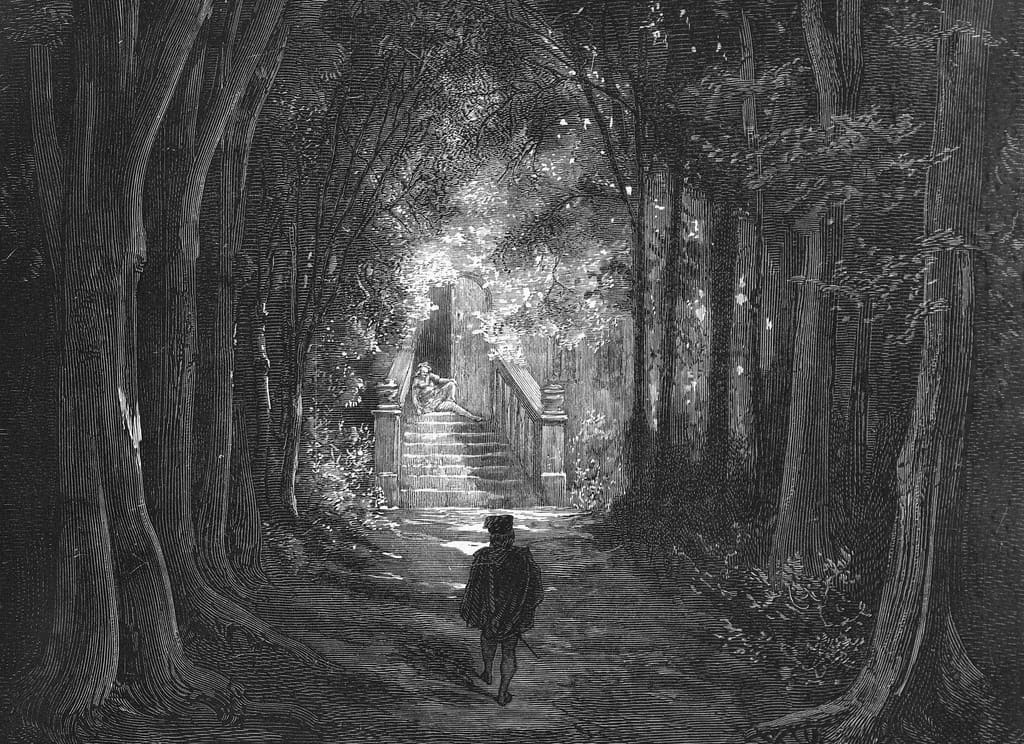
The tales themselves came from people who knew that table from the outside. The historian Robert Darnton, reading the stories French peasants told before Perrault and his successors wrote them down, found a world of chronic hunger and endless work, full of orphans and stepmothers. In those stories, he noted, "wish fulfillment usually takes the form of food." In one of them a discharged soldier, reduced to begging, is offered a wish by Saint Peter and asks not for paradise but for a square meal. For Darnton the peasant's wish was "a program for survival, not a fantasy of escape." Perrault's own collection shows the same world: in "Little Thumb," a famine drives a woodcutter and his wife to leave their children in the forest. The people who first told these tales knew exactly what it meant to be left out of the feast.
Maleficent noticed the injustice of the empty place at the table and built a whole film around it. But the guest it rescues is a fairy, and a powerful, beautiful one at that. The hungry child at the edge of its story, the one with the best claim to that thirteenth plate, gets no such rereading. That child is Stefan.
Two realms: plenty and scarcity
The film tells us how to judge its two worlds before it shows us either. Its narrator describes a human kingdom with "a vain and greedy king" whose people are forever discontented and envious of their neighbors' wealth and beauty. The Moors, she says, "needed neither king nor queen, but trusted in one another." Before the first scene, the humans stand for envy and the fairies for trust.
It matters who is saying this. The narrator only reveals herself in the film's final lines: "I was the one they called Sleeping Beauty." The moral map we are handed at the start, envious humans on one side and trusting fairies on the other, is drawn by the one human the Moors adopted and later made their queen. She is not a neutral witness. She is the one human the border let through, and the story she tells is, among other things, the story of why the others were kept out.
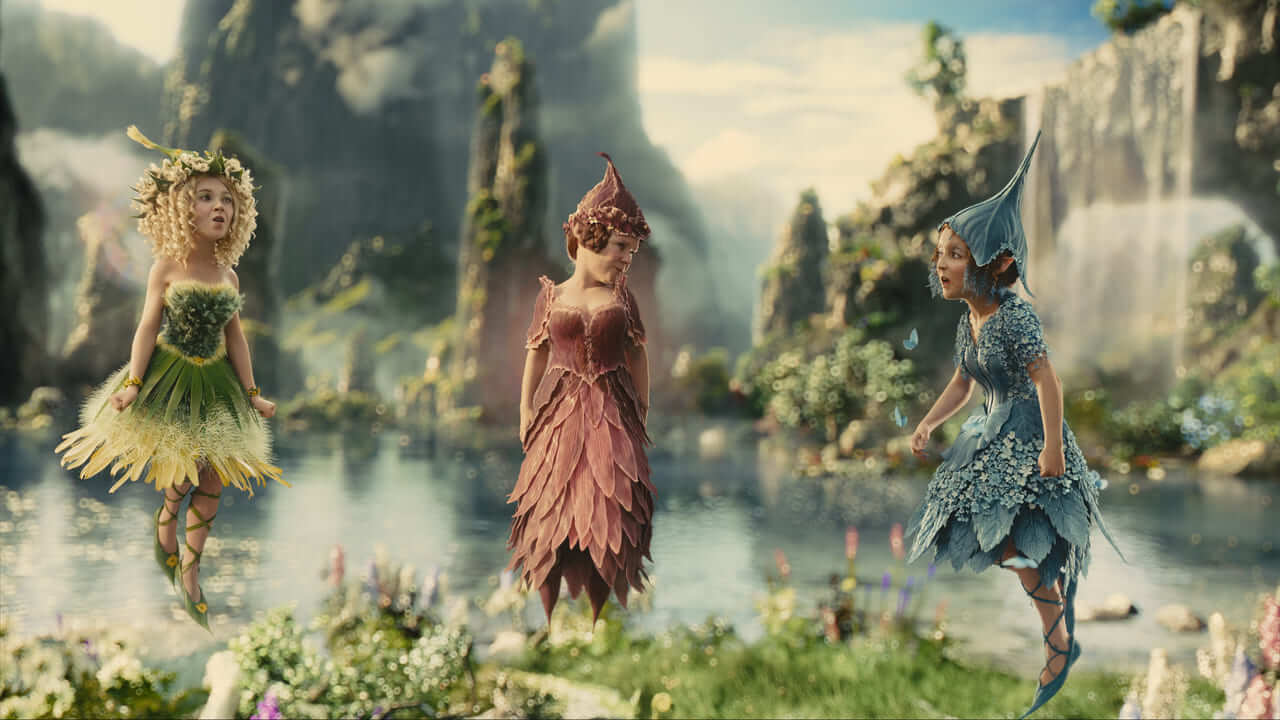
Now compare what the film actually shows. It opens by flying us over the Moors with young Maleficent as our guide. She wishes a mushroom creature good morning and admires his cap, ducks a mud fight and swoops on over waterfalls and rock spires. It is a village where everyone knows everyone and nobody needs anything. The Moors have no money, no farms and, at first, no rulers. Apart from a few border guards, nobody has to work. In the whole film we never see a creature plant, harvest, trade, fall ill or go hungry, and we never see one creature hunt another. There is no food chain at all, only glowing flowers, cheerful mushrooms, mud fights and a pool full of jewels that nobody uses. The creatures' peace costs them nothing, because magic pays for everything.
Even the film's magic takes a side. Iron, the stuff of plowshares, nails, horseshoes and swords, the metal of human work, burns a fairy at a touch. The Moors are not just free of labor. They are allergic to it.
On the other side of the border is the world we know. People there grow old, fall ill and die. Kings go to war for treasure, and when a king needs iron, ironworkers are shaken awake in the small hours and sent back to the forges. To them the Moors are not a paradise next door but, in King Henry's words, a place "where no one dares to venture" for fear of what lives inside. Fear and want make a dangerous mix, and the king's answer to the forest nobody dares to enter is to march an army at it: "Well, I say crush them!" Theirs is a world of finite things, where there is not always enough for everyone, and where surviving looks a lot like hoarding, fighting and climbing.
Bertolt Brecht put the whole idea into one line of The Threepenny Opera (1928): "Erst kommt das Fressen, dann kommt die Moral." In English: "First comes food, then comes morality." The Moors have never had to choose between the two. The humans choose every day.
A thief at the pool of jewels
Stefan is the first human the film shows us up close, and it tells us exactly who he is. He lives in a barn. His parents are dead. The narrator calls him "he who had so little in the world." He doesn't wander into the Moors by chance. He walks, alone, into the one place his people are afraid of, because that is where the jewels are.
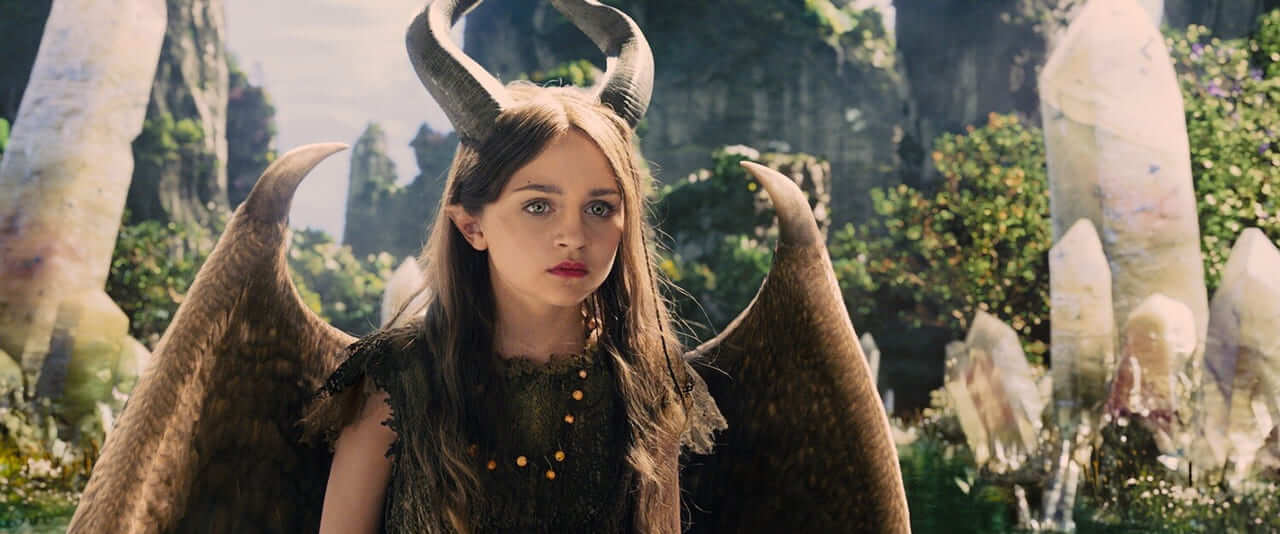
The border guards find him at the pool, and he hides, sure that they mean to kill him. Maleficent, a winged girl about his age, talks him out, and to be fair to her, she is kind. She tells him that stealing is wrong but that they don't kill people for it, and she makes a friend of him instead of a prisoner. But then she tosses the jewel back into the pool, and when he grumbles that he would have kept it if he had known she would throw it away, she answers: "I delivered it home, as I'm going to do for you."
Everything the film believes about belonging is in that answer. The jewel belongs to the Moors, so it goes home to the pool, where it does nothing. The boy belongs to the barn, so he goes home to the barn. Nobody asks if he has eaten. Nobody offers him a meal, a bed or a corner of a forest that has more than it could ever use. Maleficent walks him to the border and tells him not to come back, because it isn't safe.
On the way, his iron ring burns her hand, and he throws it away. The narrator lingers on the gesture: he "who had so little in the world" gave up the ring so that their hands might touch again. It is the only price anyone pays for their friendship, and the poor boy is the one who pays it. He comes back anyway, and for years the two are friends, but nobody ever offers him a place to stay. Maleficent's kindness is real, but it is personal. A friendship can cross a border; it doesn't open one.
Rabindranath Tagore wrote this story more than a century earlier, in "Dui Bigha Jomi" (Two Bighas of Land), a poem from 1895 that Bengali children still learn at school. Upen, a poor farmer, has lost everything to debt except two bighas of land, less than an acre. The landlord wants it to square off his garden, and when Upen won't sell, a court decree on a false debt takes it anyway. Upen wanders for some fifteen years. When he finally comes home, his old yard is the landlord's garden, and as he sits under the mango tree he grew up with, a gust of wind drops two ripe mangoes on the ground beside him. The gardener drags him off, and the landlord laughs and calls him a seasoned thief dressed as a holy man. The poem's best-known couplet could have opened Maleficent in place of its narrator:
এ জগতে হায় সেই বেশি চায় আছে যার ভূরি ভূরি,
রাজার হস্ত করে সমস্ত কাঙালের ধন চুরি।
"In this world, alas, those who have plenty want the most, and the king's hand steals everything the poor own." Upen's answer to the landlord ends the poem:
আমি শুনে হাসি, আঁখিজলে ভাসি, এই ছিল মোর ঘটে—
তুমি মহারাজ সাধু হলে আজ, আমি আজ চোর বটে।
"I hear it and I laugh, my eyes swimming with tears: so this was my fate. Today, my king, you have become the saint, and today I am the thief." The poem's whole point is who gets to use which word. Two mangoes that fell to the ground make a poor man a thief; a stolen field makes a rich man a gentleman with a garden.
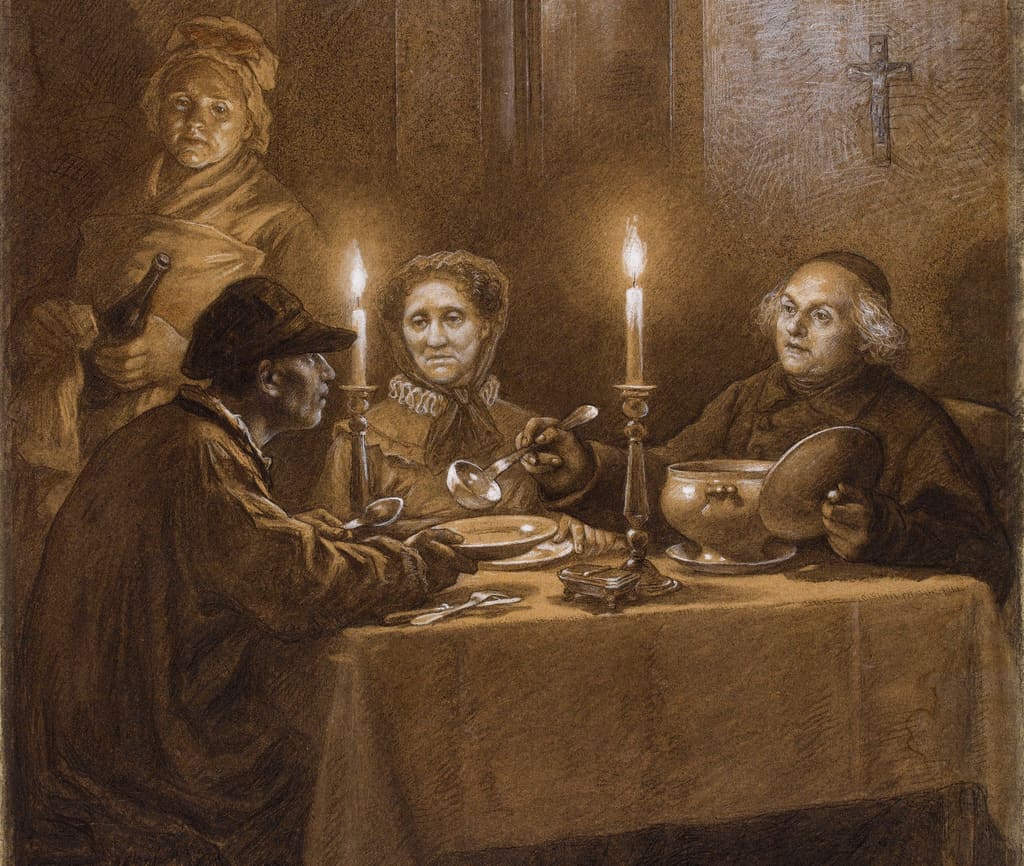
Victor Hugo showed what the other choice looks like. In Les Misérables (1862), Jean Valjean leaves prison after nineteen years, five for stealing a loaf of bread and the rest for trying to escape. Every door in town is shut to him until Bishop Myriel gives him dinner and a bed, and in the night Valjean steals the bishop's silver. When the police drag him back, the bishop tells them the silver was a gift, hands him the two silver candlesticks as well and says: "Jean Valjean, my brother, you no longer belong to evil, but to good." That is grace: someone who has more meets a thief with a gift instead of a border. The bishop gave away nearly the only valuable things he owned. The Moors would not spare one stone from a pool full of them.
One way up
As the years pass, the narrator tells us, Stefan's ambition "pulled him away from Maleficent, and towards the temptations of the human kingdom." Temptation is a strange word for what a boy from a barn finds at court: a roof, regular meals, a future. On their very first day he told Maleficent that someday he would live in the castle, and he said it minutes after she had walked him back to the border. The Moors offered him friendship. The castle was the only place that offered him a life, so that is where he went.
Then the human kingdom shows him what its ladder is made of. King Henry marches on the Moors to take "the Moors and its treasures," as he once promised his people, and Maleficent beats him back. Dying, he gathers his men and makes them an offer: "Kill the winged creature. Avenge me, and upon my death you will take the crown." For a man like Stefan, who has nothing at court but his ambition, it is the only promotion the kingdom will ever offer, and the price is the life of the one person in the Moors who ever cared for him.
What Stefan does next is the film's central crime, and the film stages it carefully. He goes back to the Moors to warn her that the king will stop at nothing. They talk through the night, the years fall away, and she forgives him. Then he offers her a drink. While she sleeps, drugged, he finds that he cannot kill her. Instead he burns off her wings with iron and carries them to the dying king as proof, and soon a herald presents him to the court as "the first of his line."
None of this excuses Stefan. Angelina Jolie herself called the scene a metaphor for rape, and the film gives it the weight it deserves. But the scene also shows the two forces pulling at him. One is a love he cannot quite bring himself to kill. The other is a kingdom that will pay him only for her death. The Moors had no place for him; the castle had only one, and it had to be bought with her wings.
Belonging by birth
Why does nobody in the Moors offer Stefan a place? Because the Moors decide who belongs by what you are, not by what you do. The narrator talks about "the greed and envy of men" as if they were in the blood: Maleficent "had never understood" them, "but she was to learn." Once greed is human nature, nothing about the border ever needs to change. It only needs to be higher.
We call this a chassis nationality. You belong to the Moors because of the body you were born in, with wings or bark or horns, and you are kept out because of yours. Nothing is asked of those inside except to hold the border. Beyond that, we never see the creatures run anything together, look after a sick neighbor, share food in a lean year or build something for each other. The narrator says they trust one another, but trust costs nothing where nothing is ever scarce. The Moors are less a commune than a gated suburb: neighbors with no reason to need each other, held together by the privilege of being inside.
Political philosophers have argued about this kind of belonging for decades. In 1987 Joseph Carens, making the case for open borders, called citizenship in the Western democracies "the modern equivalent of feudal privilege": "an inherited status that greatly enhances one's life chances," settled before you have done anything at all. He borrowed John Rawls's famous thought experiment and asked what rules we would choose for the world if we did not know which side of the border we would be born on. Behind that veil, nobody would choose the Moors' rules. You would have to be sure of being born with wings, and the veil is there to take that certainty away.
Even Maleficent, who once loved a boy from a barn, saves her sharpest scorn for the poorest humans. When she sweeps into Aurora's christening, she looks the crowd over from the top down ("Royalty, nobility, the gentry") and ends with a sneer: "Even the rabble."
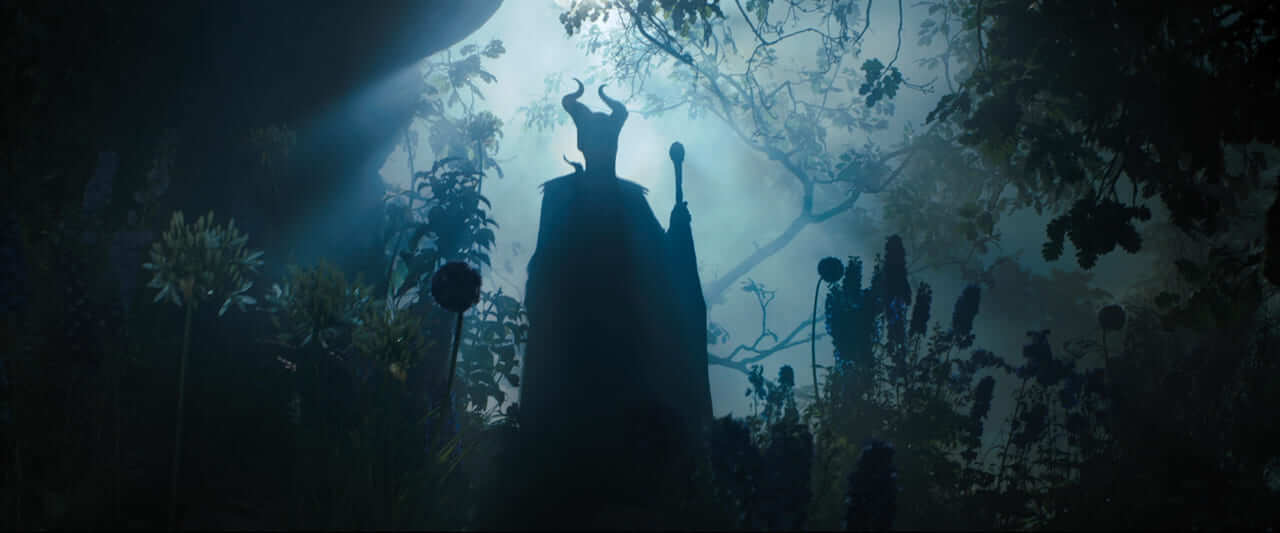
You can see what that belonging is made of when it is tested. After Stefan's betrayal, Maleficent takes a throne in the darkened Moors and curses his baby daughter. When his soldiers come hunting for her, she grows a wall of thorns so that, in the narrator's words, the Moors "might never again suffer the touch of any human." Not just the soldiers: any human. It is the Grimms' hedge of thorns put to a new use. In the old tale it grows around a sleeping castle and kills the princes who try to force their way in; here it grows around a whole people's paradise, and its job is to keep every other people out.
Tagore warned about exactly this in Nationalism (1917), where he called the nation "the organized self-interest of a whole people, where it is least human and least spiritual." The Moors began the film needing neither king nor queen. One betrayal turned them into a nation, with a ruler on a throne, a crown and a wall.
Aurora, the acceptable human
Aurora is the exception that proves the rule. She is the one human the Moors take in, and the film offers her as the bridge between the two worlds. She was made acceptable long before she arrived. She was taken from the castle as a baby and raised by three pixies in a cottage deep in the woods, far from the court, the town and its troubles. When the pixies can't work out how to feed her, Maleficent has her raven, Diaval, feed her from a flower. Even her grace is a gift. At her christening the pixies wish her beauty and a life without sadness, and Maleficent's curse itself begins with the promise that she will "grow in grace and beauty, beloved by all who meet her." When the creatures of the Moors fall in love with her, they are doing what a spell said they would.
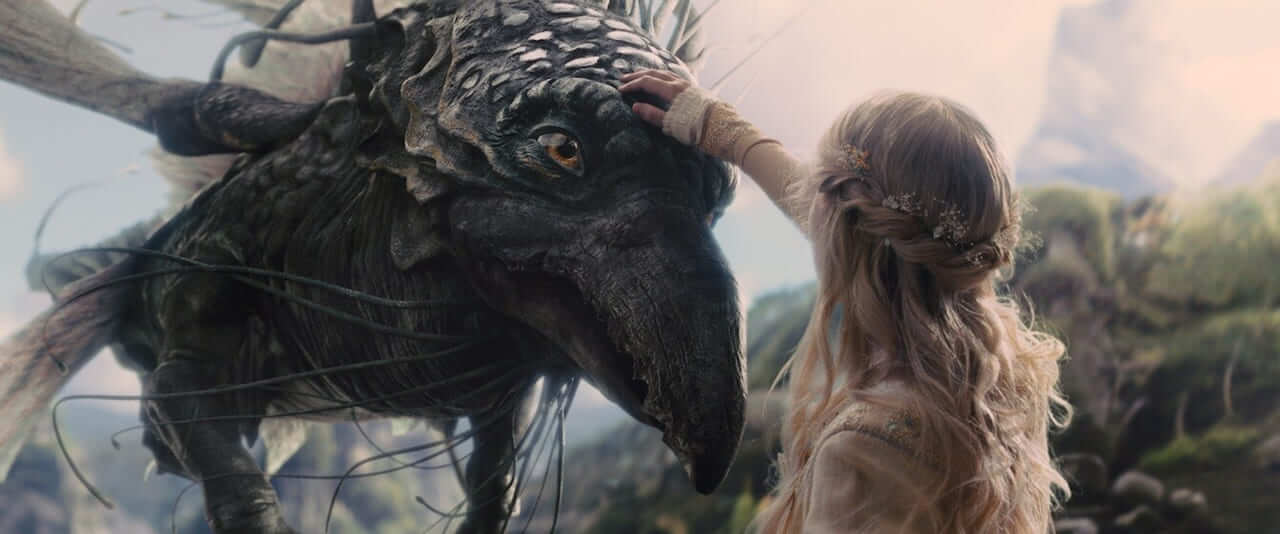
When Aurora tells Maleficent that she will come and live in the Moors when she is older, Maleficent answers: "You could live here now." Set that line next to the one she said to Stefan. Same fairy, same border: one human child is delivered home, the other is asked to stay. Part of the difference is history: Maleficent has watched over Aurora all her life, and she is the one who cursed her. But part of it is what each child asks for. Stefan came with nothing and took something. Aurora plans to sleep in a tree, eat berries and nuts and make friends with all the Fair People. She is humanity with the need taken out, a guest who asks for nothing the forest can't spare.
Now picture the scene the film never shows: a thousand Stefans at the wall in a hard winter. In 1974 the ecologist Garrett Hardin made the case for turning them away in an essay called "Lifeboat Ethics." Rich nations, he argued, are lifeboats with limited room: take in every swimmer and the boat sinks with everyone in it. The Moors live by that rule without ever saying it. But Hardin at least counted his seats: fifty people in a boat built for sixty. The Moors never count theirs. And if the gates did open, the newcomers would bring what people bring: fires against the cold, axes for timber, fields for food. Things would have to be shared out, and the creatures would have to bargain and compete for the first time. Their purity has never been tested by a hard winter, and we doubt it would pass.
The sequel said it out loud
Five years later, Maleficent: Mistress of Evil (2019) came closer to this reading than any review we have found. Its villain, Queen Ingrith, grew up in a kingdom on the Moors' border. One hard winter, she tells Aurora, the crops died and her people suffered, and when they looked over their walls they "could see the fairies thriving." She and her brother wanted to "take what we needed." Her father, the king, wanted the fairies' kindness instead. He sent her brother to them, and her brother never came back.
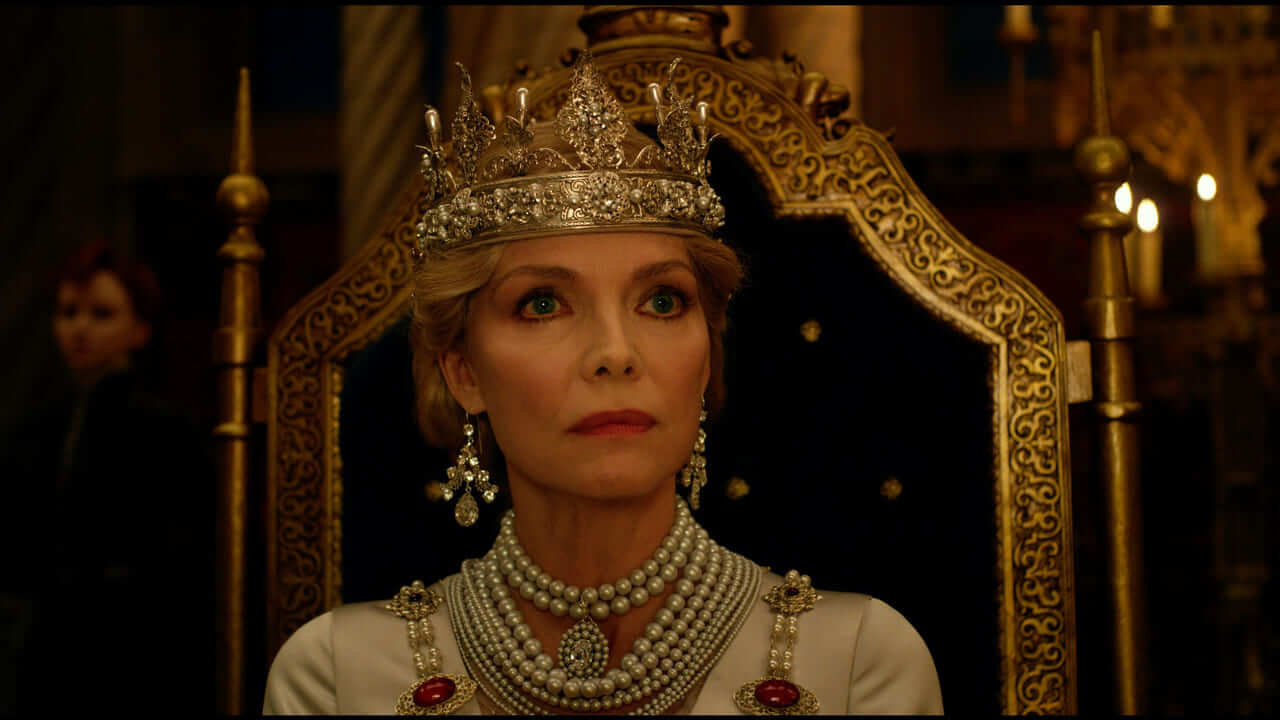
Her speech is the argument of this article, almost word for word, in a villain's mouth, and the film answers it only with slogans. In the final battle Ingrith tells her son Philip that the fairies "stand between us and everything we need to survive." He tells her she is wrong, that "we can stand together," and the ending declares that "all are welcome." But nobody asks whether the fairies could have helped a starving kingdom, or what a hungry child looking over that wall would learn. By the time Ingrith explains herself, she has already had iron and pollen mixed into a red powder that kills fairies. Her winter becomes a villain's excuse, and the film ends by turning her into a goat.
What Ingrith describes is a famine of the kind the economist Amartya Sen spent his career explaining. His book Poverty and Famines (1981) opens with a distinction: "Starvation is the characteristic of some people not having enough food to eat." It is not, he goes on, a sign that there is not enough food. In the Bengal famine of 1943, which killed around three million people, Sen showed that the food had not run out: Bengal's supply that year was only about 5 percent below the average of the five years before, and higher than in 1941, when nobody starved. People died because the price of rice soared far beyond what laborers could earn, until they had lost any claim on the food that existed. Ingrith's people go hungry within sight of a forest that is thriving. Their problem is not that the world has no food in it. It is that the food is on the other side of the wall.
The sequel also shows the other half of our argument. Maleficent's own people, the Dark Fey, have real grievances: humans used iron against them for centuries and drove them underground. But when they find the iron that nearly killed Maleficent, Borra, one of their leaders, calls for war on the spot, while Conall pleads for peace. Plenty makes peace easy. Driven into a cave and nearly wiped out, fairies are as warlike as anyone.
Other paradises with a border
Maleficent is not the only story with a glowing paradise on one side of a line and desperate people on the other. The best of them take the desperate people seriously.
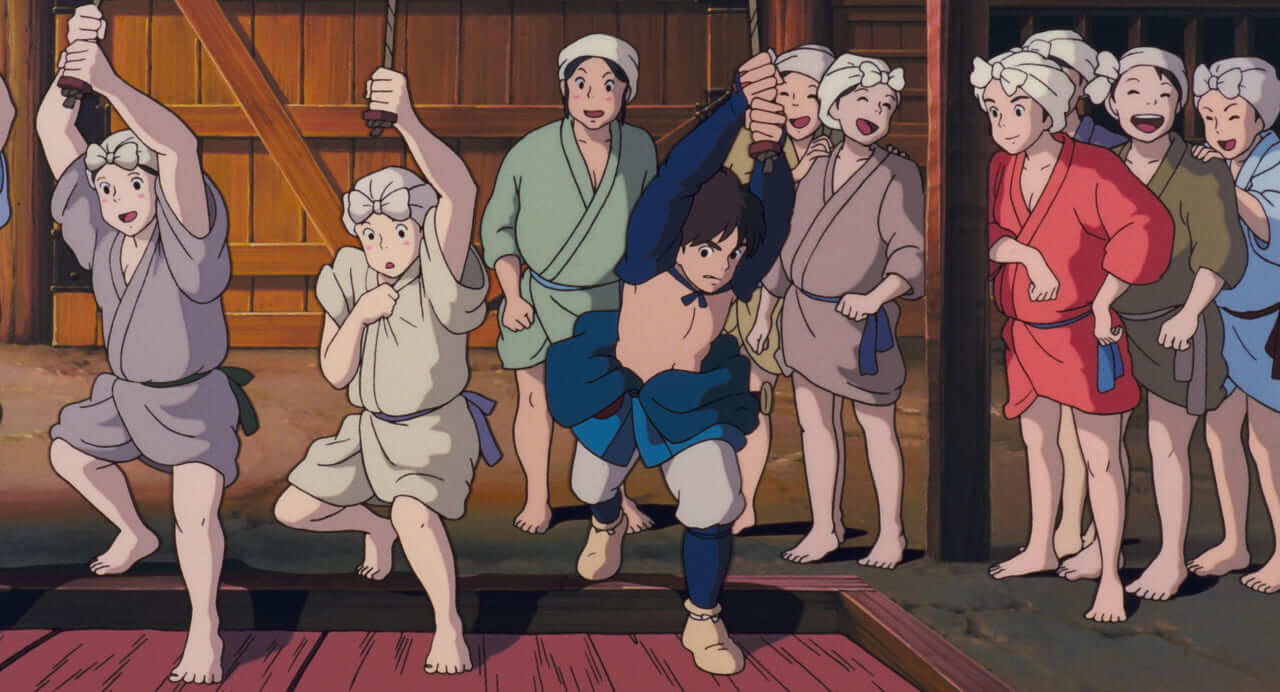
Princess Mononoke (1997). Studio Ghibli puts this exact conflict at the center of the film and refuses to pick a side. Iron Town eats the forest: to reach the iron under the mountain, Lady Eboshi's people cut down the trees of the gods. But Iron Town is also a refuge. Eboshi bought the town's women out of brothels and gave them work at the bellows. She took in lepers whom everyone else shunned, and they build the rifles that keep samurai from seizing the town's iron. The forest gods are not gentle either: the boar clan charges to its death, the wolf goddess Moro wants Eboshi's head, and the apes want to eat a human to steal his strength. "It's not bad people who are destroying forests," Hayao Miyazaki said when the film came out. Its hero, Ashitaka, only asks to see both sides "with eyes unclouded by hate." When the beheaded Forest Spirit floods Iron Town with its deadly ooze, Eboshi's answer is to start again and build a better town.
Avatar (2009). James Cameron's Pandora is another subsidized paradise, and its resemblance to the Moors is no accident: Robert Stromberg won one of his Oscars for designing it. The Na'vi live in a forest whose trees are wired together like the neurons of a brain into a network that covers the planet, and their world gives them everything they need. The film paints the mining company as plain greed: its boss holds up a gray rock that sells for twenty million a kilo. But at the edge of the frame is the reason anyone came. On Earth, as Jake says, "there's no green there," and at the end the humans are sent back to a dying world. The sequel, The Way of Water (2022), says it outright: Earth is dying, and the humans have come to make Pandora their new home. That does not make the invasion right: the Na'vi were there first, and the humans come with gunships to take their home. The Na'vi's harmony is real. It is also the kind of harmony only a world of plenty can afford.

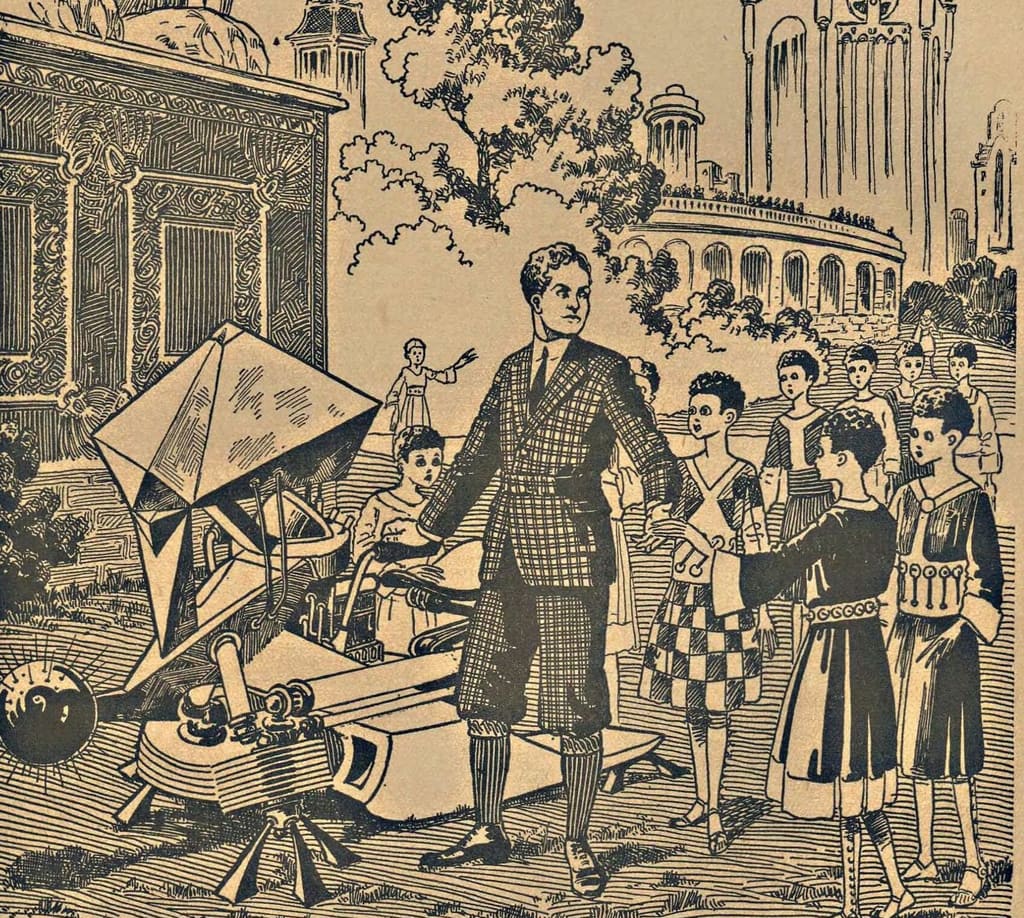
The Time Machine (1895). H.G. Wells got there first. His Time Traveller finds the far future split into two species: the Eloi, beautiful and idle, living in gardens in the sun, and the Morlocks, who live underground and tend the machines. His first guess is that the gap "between the Capitalist and the Labourer" kept widening until "above ground you must have the Haves, pursuing pleasure and comfort and beauty, and below ground the Have-nots." Wells even saw the fences in his own day: "About London, for instance, perhaps half the prettier country is shut in against intrusion." The Eloi's grace is paid for by someone else's darkness, and on dark nights the Morlocks come up to eat them.
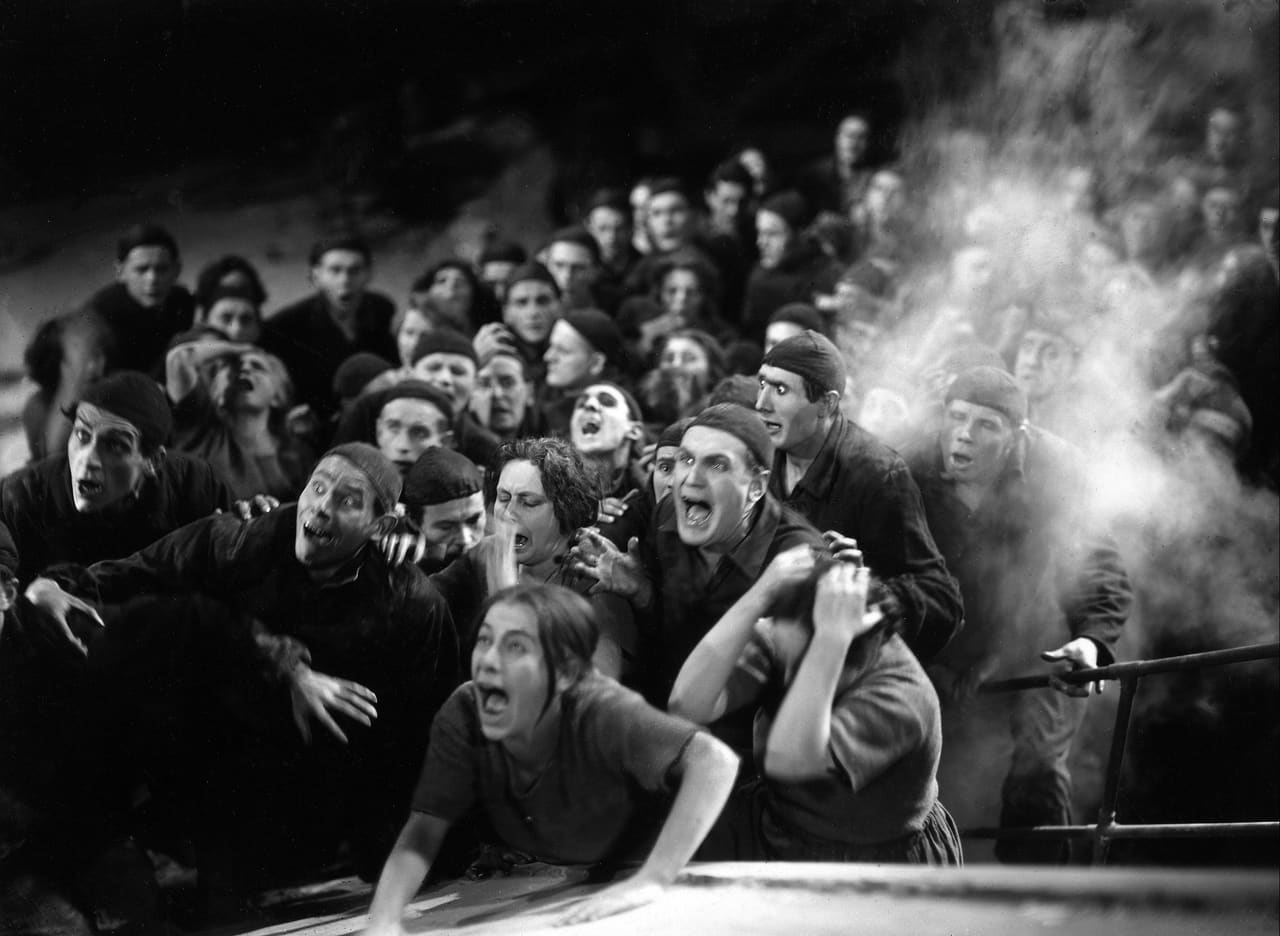
Metropolis (1927). Fritz Lang put the same split on screen. The sons of the rich play in the Eternal Gardens, a pleasure park their fathers built for them high above a city of workers who live and labor deep underground. Then Maria, a young woman from below, walks into the gardens leading a line of pale, ragged workers' children, points from the children to the rich young men and says, "Look, these are your brothers!" It is the scene Maleficent never stages: the poor children brought into paradise, and paradise made to look at them. Later, when the machines are wrecked, it is the workers' city that floods and their children who nearly drown. The film's motto, "The mediator between head and hands must be the heart," names exactly what the Moors lack. They have plenty of heart, but it never reaches past the wall.
Parasite (2019). Bong Joon-ho's film puts our thesis in a single exchange. Ki-taek, a poor father whose family has talked its way into jobs with the rich Park family, says that Mrs. Park is rich but still nice. His wife, Chung-sook, corrects him: not "rich, but still nice," but "nice because she's rich." Money, she says, is an iron: it smooths out all the creases. The film then proves her right with the weather. The same rainstorm that floods the Kims' semi-basement with sewage and sends them to sleep in a school gym is, for the Parks, a night of camping in the garden for their little son. The next morning Mrs. Park admires a sky with no pollution and calls the rain "such a blessing." As in Metropolis, the flood finds the poor first. And Mr. Park's one complaint about his driver is that he always seems about to cross the line but never does, except for his smell, which does. The Moors are the Parks' garden: generous with each other, easy to love and very clear about the line.
It isn't only fiction. When Yellowstone became the first national park in 1872, the tribes who had hunted there for generations were pushed out to keep it wild, as the U.S. National Park Service itself now acknowledges. Critics call the pattern "fortress conservation": protecting nature by fencing people out of it, usually the poorest people, who were there first. A paradise looks untouched because someone was told to leave.
Three objections
An argument like this one should face its strongest objections, and there are three good ones.
"It's a fairy tale. Magic is just magic." It is, but fairy tales have always used magic to talk about wealth. The Grimms' curse comes from a shortage of gold plates; the peasants' wishes are for food; Cinderella's happy ending is a way out of the kitchen. When a story gives one people endless plenty and the other people iron, mud and kings, that choice is part of what the story says. Maleficent did not have to make its fairies rich. It made them rich and then praised them for being good.
"The humans started it." They did. King Henry marched on the Moors for their treasure, and Stefan's betrayal is unforgivable. But the Moors' answer to one king's greed was a wall against every human, including the peasants who never marched anywhere. Punishing a whole people for what its rulers did is exactly the kind of thinking the film condemns when humans do it to fairies.
"Nobody in the film actually starves." That is true, and it is our point. The human kingdom we see is almost all court and castle: kings, knights, a christening, a throne room. The film shows us the poor only in passing, a boy from a barn and a few exhausted ironworkers, and it follows Stefan closely only once he has climbed into the palace. The hunger stays off screen, which is where the Moors keep it too. When the sequel finally puts a hungry kingdom into words, it gives the words to its villain.
Two children at the border
Put the film's two human children side by side and its real story appears. One is a poor orphan from a barn who walks into the Moors on his own and takes a jewel. He is sent home with nothing but a friendship, and the friendship doesn't survive the world he is sent back to. The other is a princess hidden in a cottage, carried over the wall of thorns by Maleficent's own magic, who asks for nothing. She is invited to stay, and in the end she is crowned.
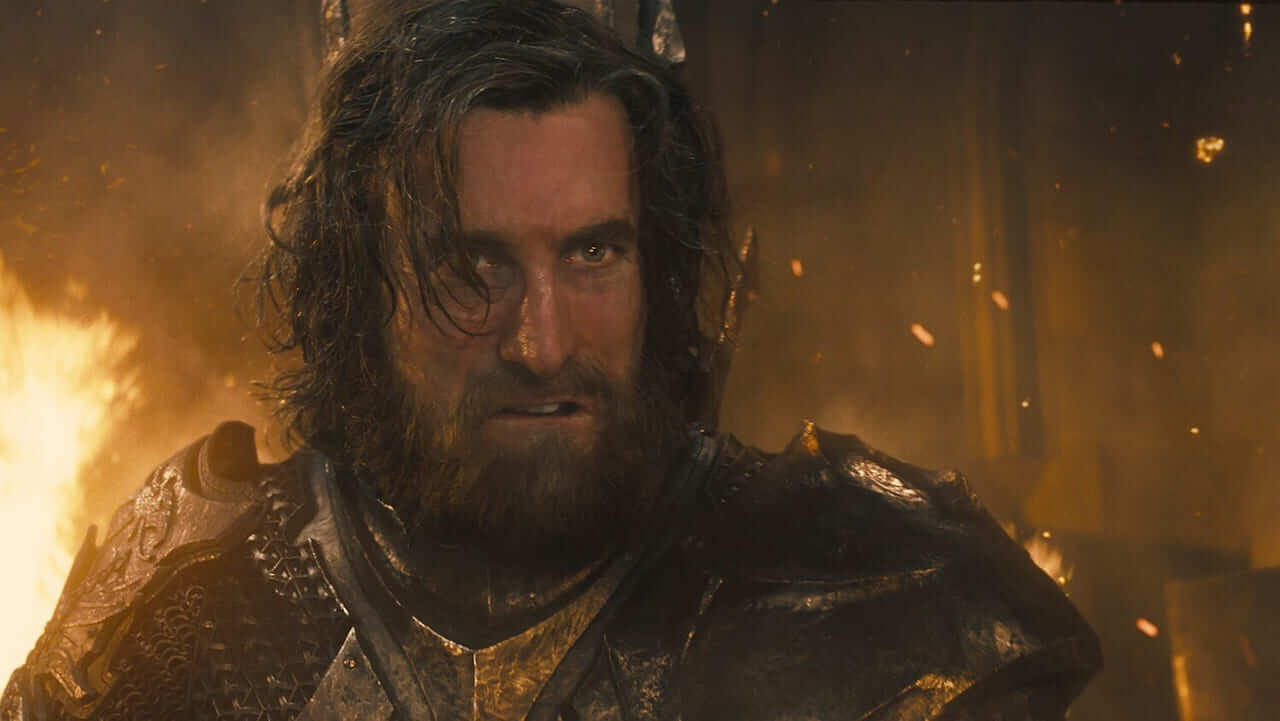
The throne does not save him. As king, Stefan becomes worse than the vain and greedy king he grew up under: paranoid, talking to the wings he keeps locked away while his wife lies dying, dragging exhausted ironworkers back to work in the middle of the night. A boy who is shown paradise and then walked back to his barn learns that nobody is going to share the good life with him. He will have to take it. Stefan learned that lesson at the pool of jewels and spent the rest of his life acting on it. It is fitting, and grim, that his weapon in the end is iron: the metal he gave up as a boy so that he could hold a fairy's hand.
The ending looks like the border coming down. Maleficent pulls down her wall of thorns, takes off her own crown and crowns Aurora queen, and the two kingdoms are united. The narrator says it was done by "one who was both hero and villain." But notice who is crowned. Not a human the Moors had to make room for, but a human who had already become one of them. The gates open for a queen they approved years ago. We never see the first hungry farmer from the human side walk into the Moors looking for something to eat, or find out whether anyone feeds him.
The oldest version of this story may be the one in the Gospel of Luke. A rich man feasts every day while a beggar named Lazarus lies at his gate, "desiring to be fed with the crumbs which fell from the rich man's table." When both men die, the rich man looks up from his torment and is told that "between us and you there is a great gulf fixed." The gulf was there all along. It began at the rich man's gate, and he never crossed it while he still could.
More than a century ago, in Gitanjali, Tagore prayed for his country to wake into a heaven "where the world has not been broken up into fragments by narrow domestic walls." For all their magic, the Moors were never that place. A world is not good because it is beautiful, or because the people inside it are kind to each other. It is good when its kindness reaches the people at its border. Grace that is only given to those who already belong is not grace at all. It is a luxury.
Do you see the Moors differently? Tell us
Sources :
- Maleficent: Disney's Maleficent page (opens in a new tab), Maleficent on Wikipedia (opens in a new tab), Maleficent on Box Office Mojo (opens in a new tab), Sleeping Beauty (1959) on Wikipedia (opens in a new tab)
- The wing scene: Angelina Jolie on HuffPost (opens in a new tab)
- Other readings: Jordan Shapiro, "Why Disney's 'Maleficent' Matters" (Forbes, 2014) (opens in a new tab), Helena Hammond in Dance Research (2017) (opens in a new tab), Anindra Candrika, "The Green Border between Monster and Human" (Culture Unbound, 2026) (opens in a new tab)
- Maleficent: Mistress of Evil: Mistress of Evil on Wikipedia (opens in a new tab)
- The older tales: the Grimms' Household Tales (opens in a new tab) (Margaret Hunt's translation), The Blue Fairy Book (opens in a new tab) (Perrault's "The Sleeping Beauty in the Wood"), The Fairy Tales of Charles Perrault (opens in a new tab) ("Little Thumb"), Doré's engraving on Wikimedia Commons (opens in a new tab)
- Robert Darnton: "The Meaning of Mother Goose" (opens in a new tab) (The New York Review of Books, 1984)
- Brecht: The Threepenny Opera on Wikipedia (opens in a new tab)
- Tagore: দুই বিঘা জমি (Dui Bigha Jomi) on Wikisource (opens in a new tab), Nationalism (opens in a new tab), Gitanjali (opens in a new tab) (Project Gutenberg)
- Victor Hugo: Les Misérables (opens in a new tab) (Isabel F. Hapgood's translation, Project Gutenberg), Frédéric Lix's drawing at Paris Musées (opens in a new tab)
- Borders and belonging: Lifeboat ethics on Wikipedia (opens in a new tab), Joseph Carens, "Aliens and Citizens" (JSTOR) (opens in a new tab)
- Amartya Sen: Amartya Sen on Wikipedia (opens in a new tab), the Bengal famine of 1943 on Wikipedia (opens in a new tab)
- Princess Mononoke: Studio Ghibli's Princess Mononoke page (Japanese) (opens in a new tab), Miyazaki on Mononoke-hime (opens in a new tab) (translated by Ryoko Toyama)
- Avatar: Avatar's official site (opens in a new tab), the Hallelujah Mountains on Pandorapedia (opens in a new tab)
- H.G. Wells: The Time Machine (opens in a new tab) (Project Gutenberg), Amazing Stories, May 1927, on Wikimedia Commons (opens in a new tab)
- Metropolis and Parasite: Metropolis on Wikipedia (opens in a new tab), Horst von Harbou's set photograph on Wikimedia Commons (opens in a new tab), Parasite on Wikipedia (opens in a new tab)
- Luke 16:19–31: the King James Version on Wikisource (opens in a new tab)
- Yellowstone: the National Park Service on the Yellowstone Act (opens in a new tab), Fortress conservation on Wikipedia (opens in a new tab)
Maleficent and Maleficent: Mistress of Evil are © Disney, Avatar is © 20th Century Studios and Princess Mononoke is © 1997 Hayao Miyazaki/Studio Ghibli, ND. The film stills are © their studios and come from their official sites and publicity stills (Studio Ghibli offers its scene images for free use); they are shown here for commentary and criticism. Gustave Doré's 1867 engraving, Horst von Harbou's 1926 photograph from the set of Metropolis and Frank R. Paul's 1927 drawing for The Time Machine are in the public domain, and Paris Musées publishes Frédéric Lix's drawing for Les Misérables free of rights (CC0). The English versions of Tagore's Bengali lines are our own translations, and the pixel-art illustration at the top is our own.
If you like this article,